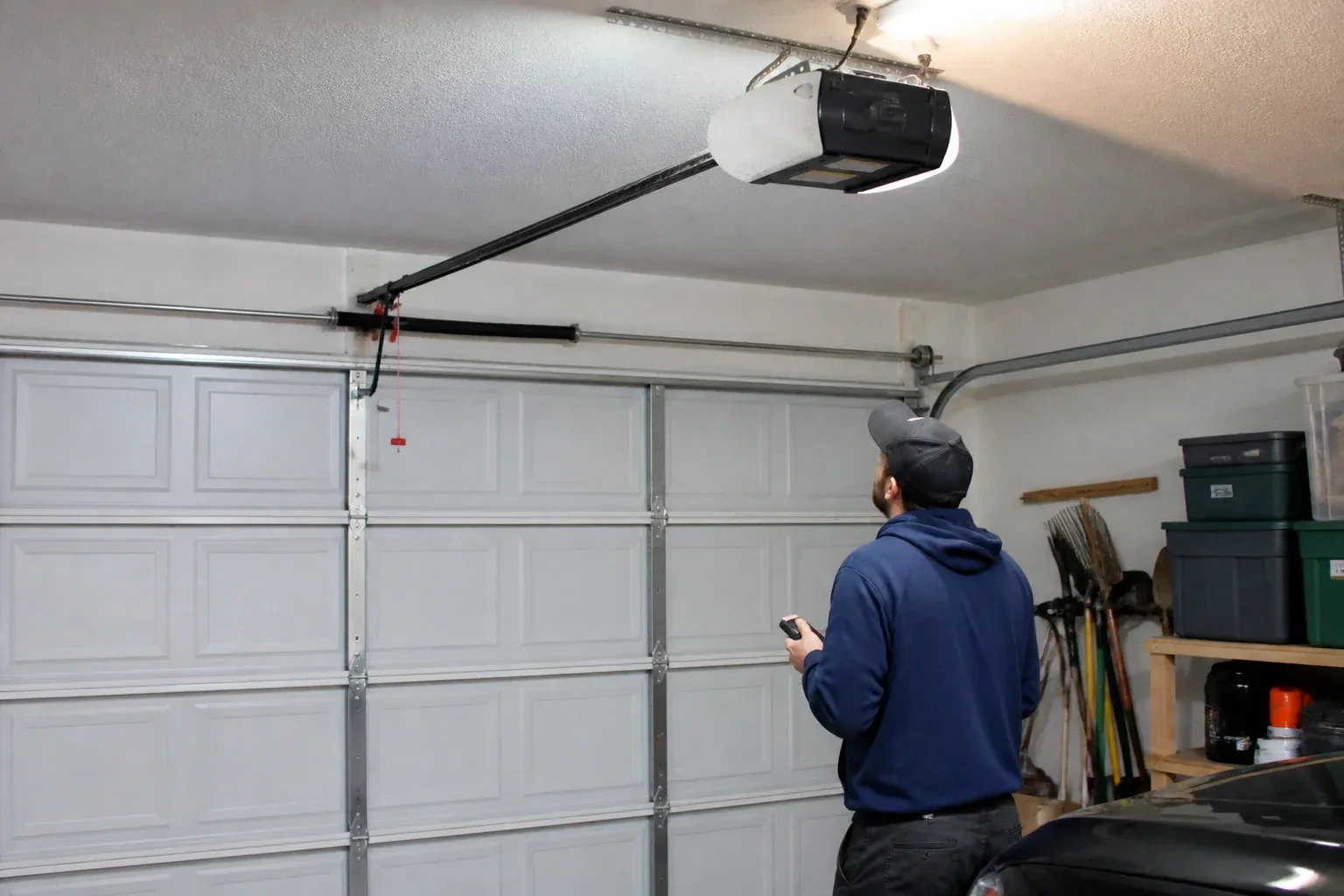
Sound familiar?Milton
- The call
- Someone tightened the belt last month to stop the sag. Now the opener sounds like a chain drive, the motor labours on the way up, and the whole rail vibrates under the ceiling.
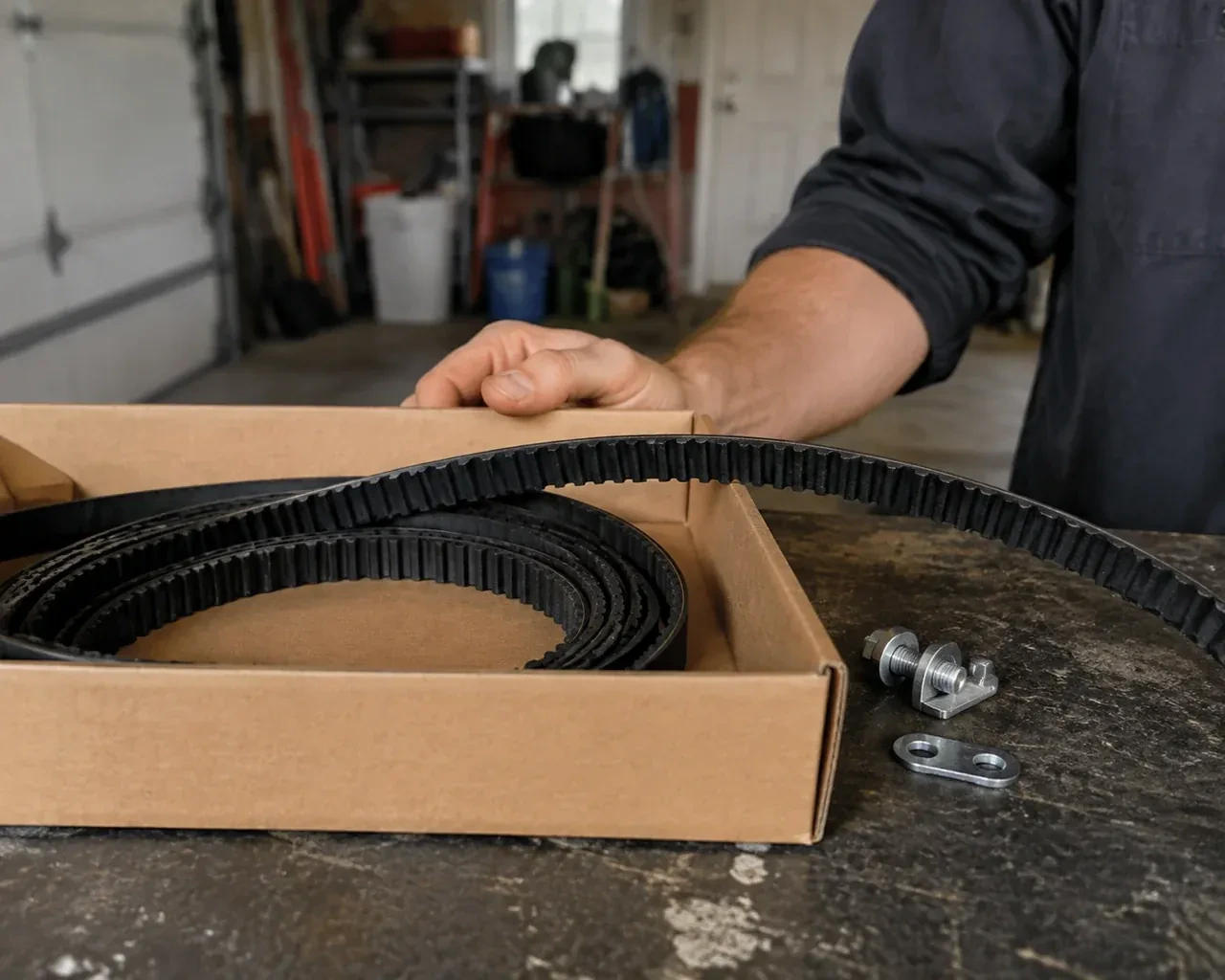
Someone tightened the belt last month to stop the sag. Now the opener sounds like a chain drive, the motor labours on the way up, and the whole rail vibrates under the ceiling.
The most common belt-drive repair is the simplest: the belt has stretched over thousands of cycles and hangs slack under the rail. On its way up it slaps the rail and skips a tooth or two on the sprocket. Tension lives at the trolley, where a threaded shaft, a spring and a square nut set how much the belt is pulled taut. The technician sets that spring to the maker's stated length, confirms a little give at mid-span, then runs the door and listens. If the belt has stretched past what the adjuster allows, or the rubber has aged, a new belt goes in instead.
Sound familiar?Milton
Belt-Drive Opener Repair · Milton
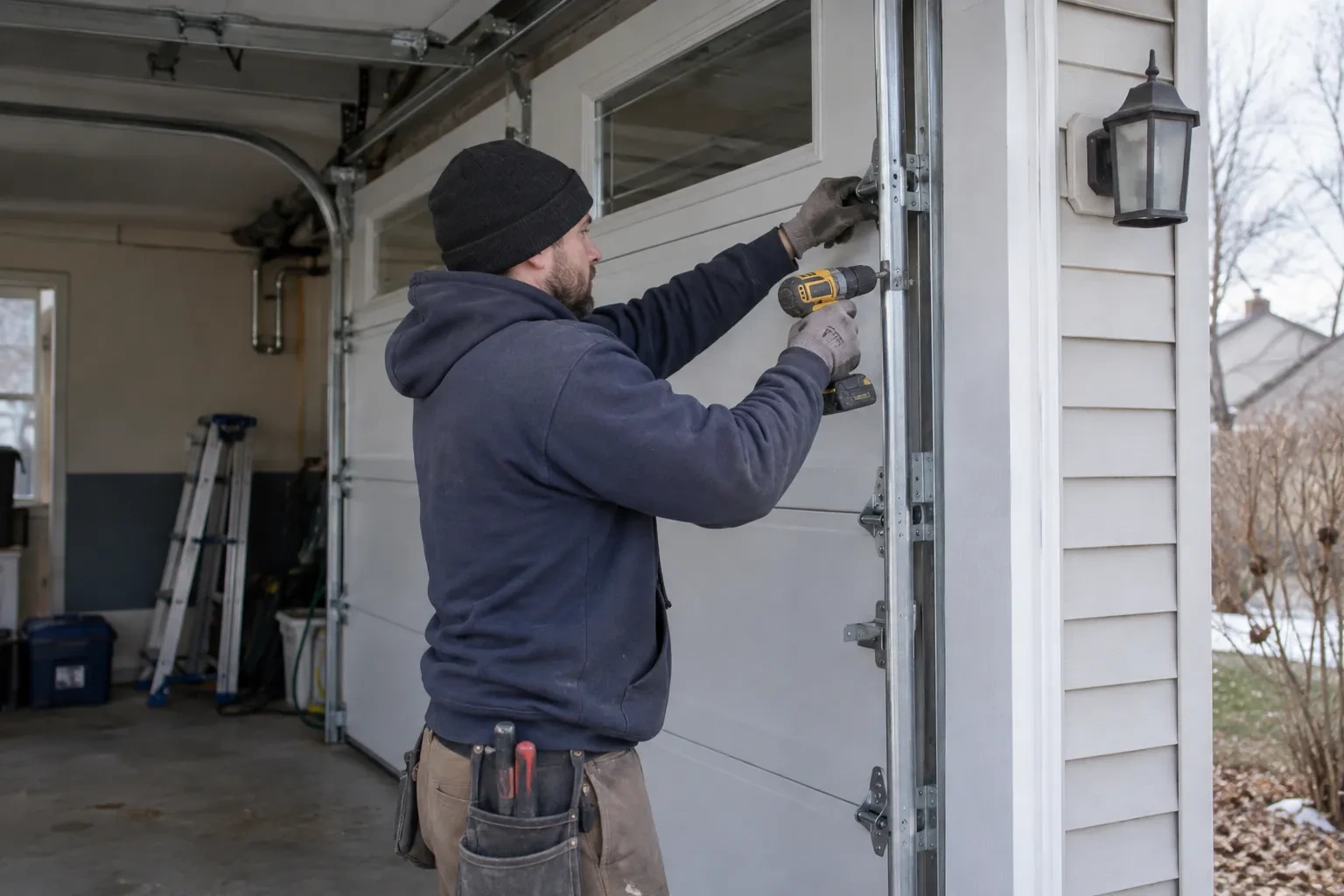
Scene 1
Before any part is changed, the technician runs the door from the wall control and watches what the operator thinks it is doing. Does it stop short of the floor and reverse, or drive the trolley into the stop bolt? Does the top section stop clear of the header bracket? Does the door come back up on meeting a 2x4 laid flat and when the beam near the floor is broken? The answers separate a drive fault from a settings fault, and settings will be relearned once the belt work is done anyway. The wall control height, the photo-eye height and where the red handle hangs are noted at the same time.
Scene 2
A replacement belt is matched to the rail length and to the tooth pitch of the sprocket, so a belt for a 7 ft door rail differs from one for an 8 ft rail. The old belt is unclipped from the trolley, lifted off the drive sprocket and drawn back around the idler pulley. The new belt is threaded the same way in reverse, teeth toward the sprocket, its ends joined to the trolley shaft with a fresh clip or master link. The technician confirms the belt sits centred on the pulley and in the rail, then tensions the spring to specification. Because the sprocket was bare, the motor and trolley are phased before the door is reconnected.
Scene 3
Because the door was tested by hand before the belt was touched, you leave with the springs and the drive in agreement. Once a season, with the door closed, unplug the operator, pull the release and lift the door to about a metre: it should stay there. If it drifts down or creeps up, the springs have moved and the belt will soon be working harder than it should, so book a spring adjustment before the belt shows it. A door that hesitates at one point in its travel with the operator disconnected is telling you about a roller or a hinge rather than the belt, and that too is a small visit.
What shapes the quoteDorset Park Garage Door Specialists
FeesSame any hour
A look every few months is enough: with the door closed and again with it open, the belt should run level with no sag below the rail. A yearly service that checks tension against the spring length, looks at the sprocket and pulley and runs the balance and reversal tests keeps a belt drive quiet for its whole life. Check again after the first hard cold of the winter.
Park the cars outside and leave the floor beneath the rail and the door's path open so a stepladder can be set at either end. Lift bicycles and boxes off hooks near the rail. Keep the remotes and wall control within reach and know where the operator plugs in. If the door is stuck closed with a car inside, mention it when booking.
Because the belt guides the door; the springs carry it. A door that lifts with moderate effort and stays put a metre off the floor is balanced, and a belt on that door lasts. A door that drops or drifts is loading the belt, trolley and sprocket far beyond their design, so a new belt would wear the same way. Spring work comes first in that case.
HaltonOntario
Belt-Drive Opener Repair · Dorset Park, Peru
Every square is one home in a hundred.
On-site assessment
Someone tightened the belt last month to stop the sag.
(289) 670-3139, open 24/7.
On-site assessment preferred · (289) 670-3139, open 24/7