Sound familiar?Milton
- The call
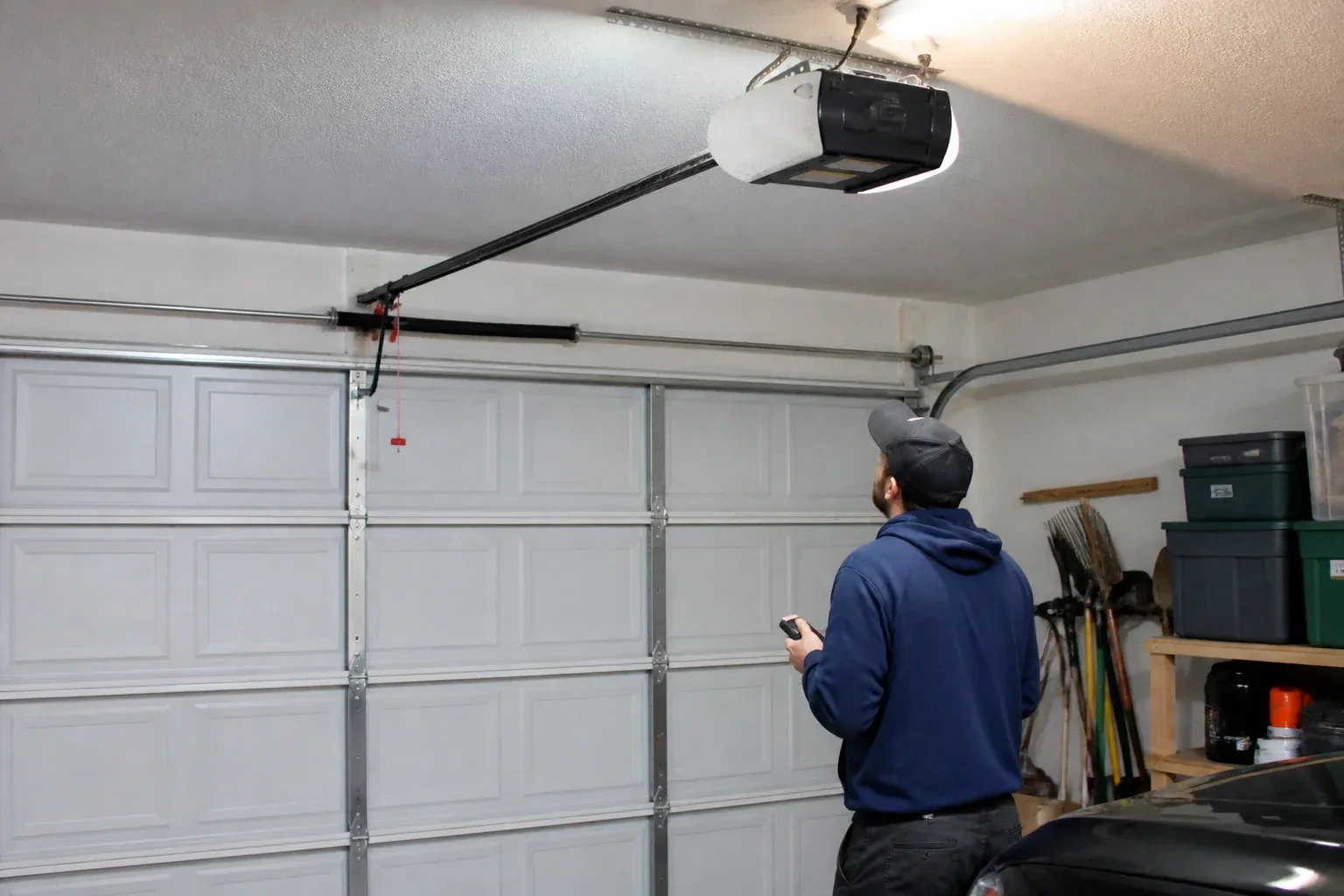
- Your remote was in the visor when the car was broken into last night. So was the insurance slip with your address on it. The door still answers that remote, wherever it is now, and you would very much like it not to.
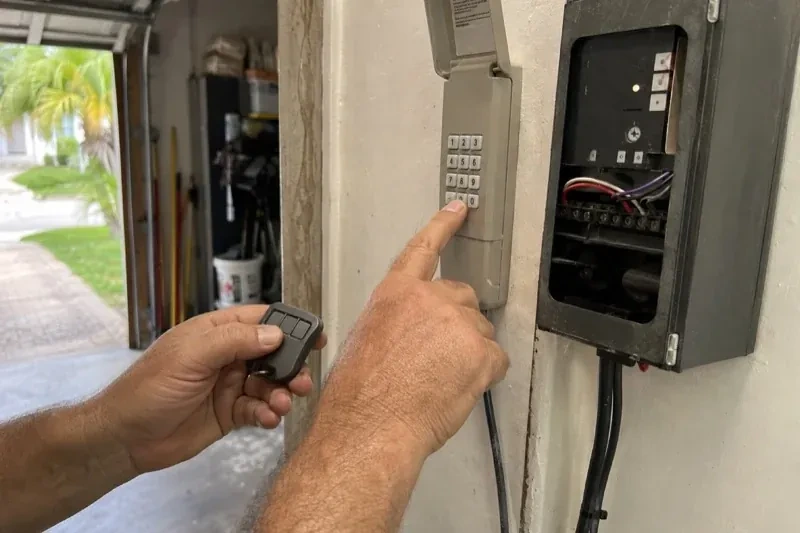
Over the years a garage accumulates controls: a remote in each car, one on a hook by the door, a keypad outside, a button in a vehicle you sold. Programming is the moment to take stock. The technician lists what exists, what works and what is missing, decides with you what should stay, and rebuilds the opener's memory to match. Each retained device is tested at the door and labelled for the door it drives. You leave with a short record of what opens the garage and what was removed, without any secret code written on it.
Sound familiar?Milton
Garage Door Remote and Keypad Programming · Milton
Scene 1
A surprising share of dead remotes are simply hungry. The technician opens each remote and keypad, reads the cell type printed inside, and checks voltage and contacts. Coin cells lose strength gradually, so a remote that works only up close is often on its last legs rather than out of range. Outdoor keypads run on small cells that sag in the cold and on contacts that salt spray and condensation corrode over a few winters. Fresh cells of the specified type and a cleaned contact are fitted before any programming attempt, because a weak transmitter can fail to pair even when everything else is right.
Scene 2
A vehicle's built-in garage button often learns in two stages on rolling-code openers. First the car learns the remote: with the handheld remote carrying a fresh cell held close to the mirror or console, the vehicle button and the remote button are pressed together until the indicator changes. Second, the opener learns the car: the technician presses the head unit's learn button and returns to the vehicle inside the window that follows to press the trained button until the door moves. Some vehicle systems follow a different sequence with no handheld remote, so the vehicle and opener instructions are checked first. Where an older in-car system cannot hear a newer opener, a small bridge module is added.
Scene 3
If an add-on receiver was fitted, your original motor and rail carry on as before while a small box near the head unit does the listening. You have new remotes and a keypad that use rolling codes, so the door no longer answers a fixed code that any similar remote might share. The receiver's power plug and its two thin wires to the wall-button terminals are shown to you so nothing is unplugged by accident. The photo eyes that made this upgrade possible are checked and their monthly test explained, since they remain the door's main protection.
What shapes the quoteDorset Park Garage Door Specialists
FeesSame any hour
Some in-car systems from earlier model years cannot hear the newest opener radios directly. The usual answer is a small compatibility bridge module that pairs with the opener and relays the car's signal, or a handheld remote clipped to the visor. The technician identifies the car's system and the opener's generation and chooses whichever gives a reliable result.
Yes, if the remote has more than one button and both openers accept it. Each button is programmed to one opener, so a two-button remote can run a double garage's two doors, or a door and a gate. Multi-door keypads also exist, running up to three openers from one pad by selecting the door before entering the code. The technician labels which button drives which door.
Sometimes, but the technician rules out two things first. Lock mode on the wall control tells the opener to ignore every remote, and gives itself away by a steadily blinking wall indicator and two flashes of the opener light whenever a remote is pressed; holding the lock button releases it. A memory cleared by a long press on the learn button is the other cause, and that one is a programming job.
HaltonOntario
Garage Door Remote and Keypad Programming · Dorset Park, Peru
Every square is one home in a hundred.
On-site assessment
The opener is an older one with a row of tiny switches inside the remote.
(289) 670-3139, open 24/7.
On-site assessment preferred · (289) 670-3139, open 24/7