Sound familiar?Dorset Park
- The call
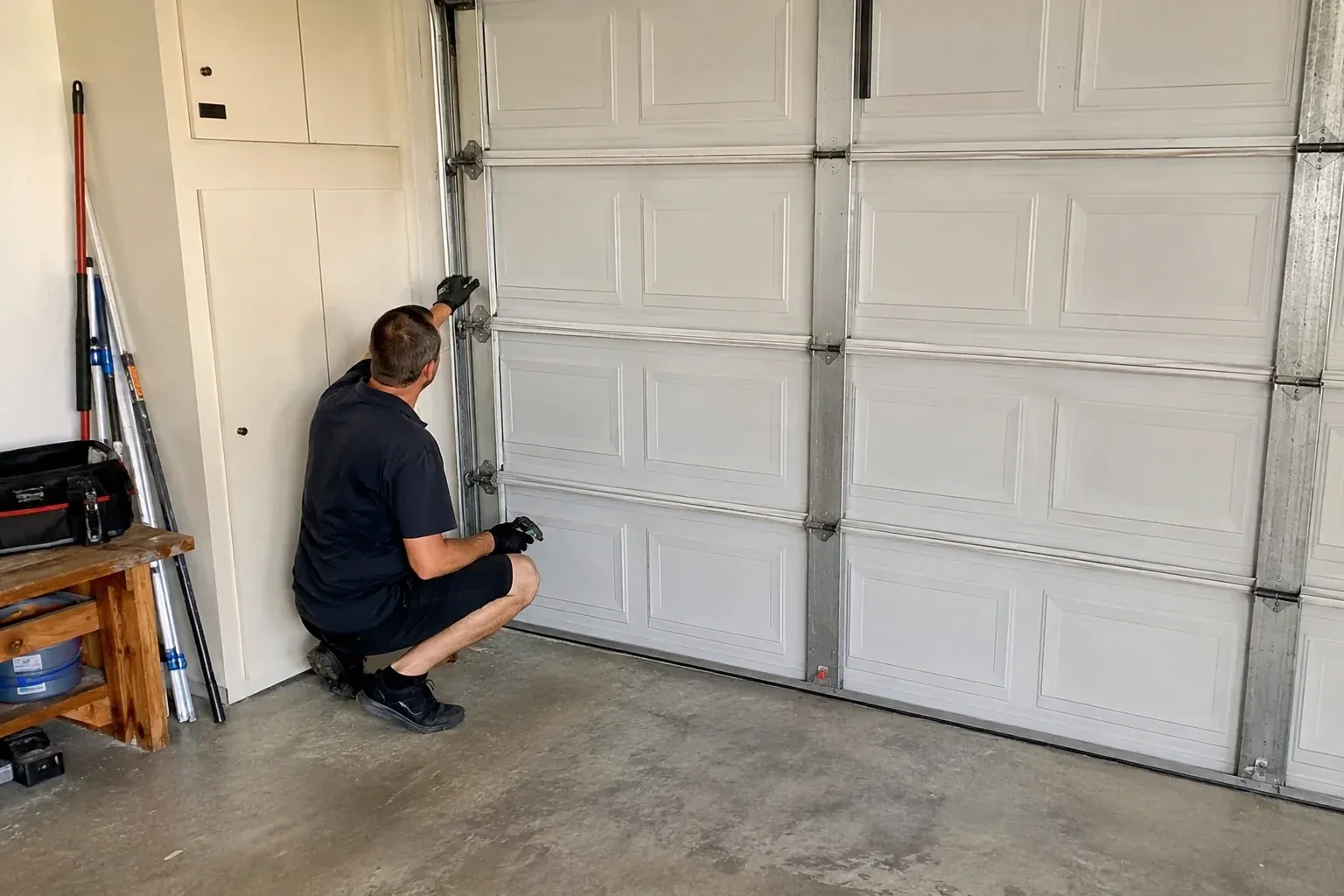
- After a windy night there is a fine ridge of snow on the garage floor along one side of the door, and another across the top step. The door was shut the whole time; the snow came in around it.
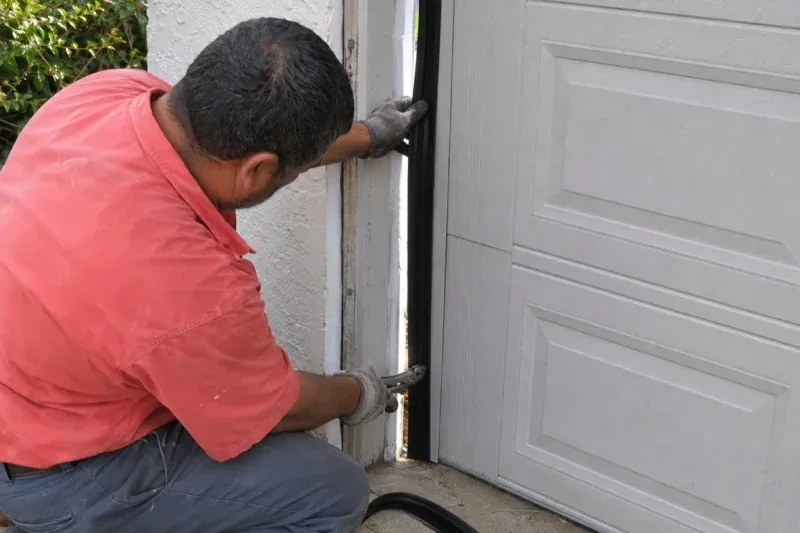
The bedroom over the garage is always the cold room, and standing in the garage you can feel why: a steady draft along the door edges that moves the cobwebs on the wall. The seal around the opening has flattened to nothing.
Around a garage door there are three seals: one on the bottom edge of the door, and two running up the sides and across the top of the opening. Those last two are the perimeter weatherstrip. They are fixed to the stop moulding on the jambs and header, and their flexible fin rests against the door face when it is closed, closing the gap between door and frame. Replacing them means fitting new lengths that meet the door evenly, cutting down how much wind, driven snow, dust, leaves and small animals get through. The bottom seal is handled as its own job, but the two are often done together.
Sound familiar?Dorset Park
Garage Door Perimeter Weatherstrip · Dorset Park
Scene 1
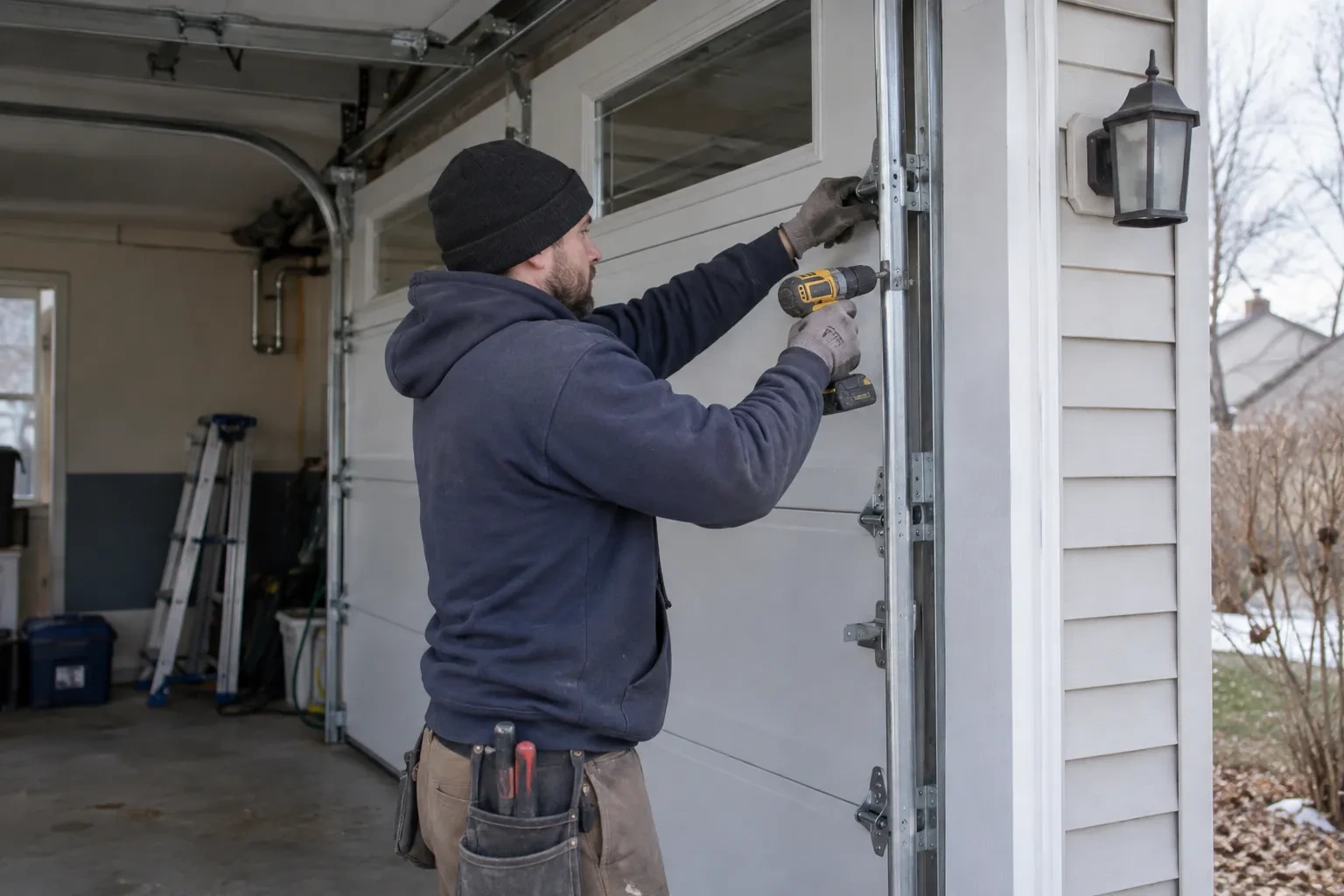
The first check needs no tools. The door is closed, the garage lights go off, and the technician stands inside looking along each side and across the header for lines of daylight. A bright, even line means the fin has shrunk back or hardened; a wedge that widens toward the top or bottom points to the door sitting out of square; a gap only at a corner means the pieces were never overlapped. On a windy day a hand or a smoke pencil along the edge finds drafts that daylight misses. The pattern of the gaps is what tells the technician whether the seal alone is the answer or whether the door needs a small adjustment first.
Scene 2
Once all three lengths are on, the door is run through several full cycles by hand and then with the opener, while the technician watches each fin for catching, folding or rubbing and listens for a squeal. The daylight test is repeated from inside with the lights off. Any joint between the new stop and the trim or brickmould where water could get behind is caulked with an exterior sealant, and the fin is wiped with a silicone spray to cut the odds of ice bonding it to the door. The old material is bagged and removed, and the household is walked round the finished opening.
Scene 3
Before leaving, the technician tells you what went on: the seal type, the profile and fin width, the colour, and the lengths of the header and sides. It is worth writing this on a card near the opener or in the door's paperwork. If one length is ever damaged, by a ladder or a car mirror, the same profile can be matched and a single piece replaced rather than the whole set. If a jamb was repaired, the note records where and with what, so anyone painting or working on the frame later knows what is behind the finish.
What shapes the quoteDorset Park Garage Door Specialists
FeesSame any hour
Paint the rigid parts only. A wood stop can be painted before the fin is fitted or with the fin masked, and a vinyl stop needs no paint at all. The flexible fin is left bare, because paint fills it and stiffens it, and a stiff fin cracks well before its time once cold weather sets in. Seals come in a range of colours so the fin can match the trim without a brush.
Wipe the fin with a silicone spray or a silicone lubricant on a cloth in late autumn and once or twice through the winter. The film cuts the odds of meltwater bonding the fin to the cold door face, though a hard freeze can still catch it. Avoid oil-based products, which soften vinyl. If the door does freeze to the seal, let the sun or a little warm water free it, dry the spot afterwards, and avoid forcing the opener.
It can help. Drafts around the garage door cool the garage, and the garage cools the floor above it and the wall it shares with the house. Closing the perimeter cuts those drafts, though how much warmer the garage runs depends on the door's own seal, the ceiling insulation and how the space is heated, not the perimeter alone. A technician can talk through those as separate steps if the room stays cold.
HaltonOntario
Every square is one home in a hundred.
On-site assessment
The bedroom over the garage is always the cold room, and standing in the garage you can feel why: a steady draft along the door edges that moves the cobwebs on the wall.
(289) 670-3139, open 24/7.
On-site assessment preferred · (289) 670-3139, open 24/7