Sound familiar?Milton
- The call
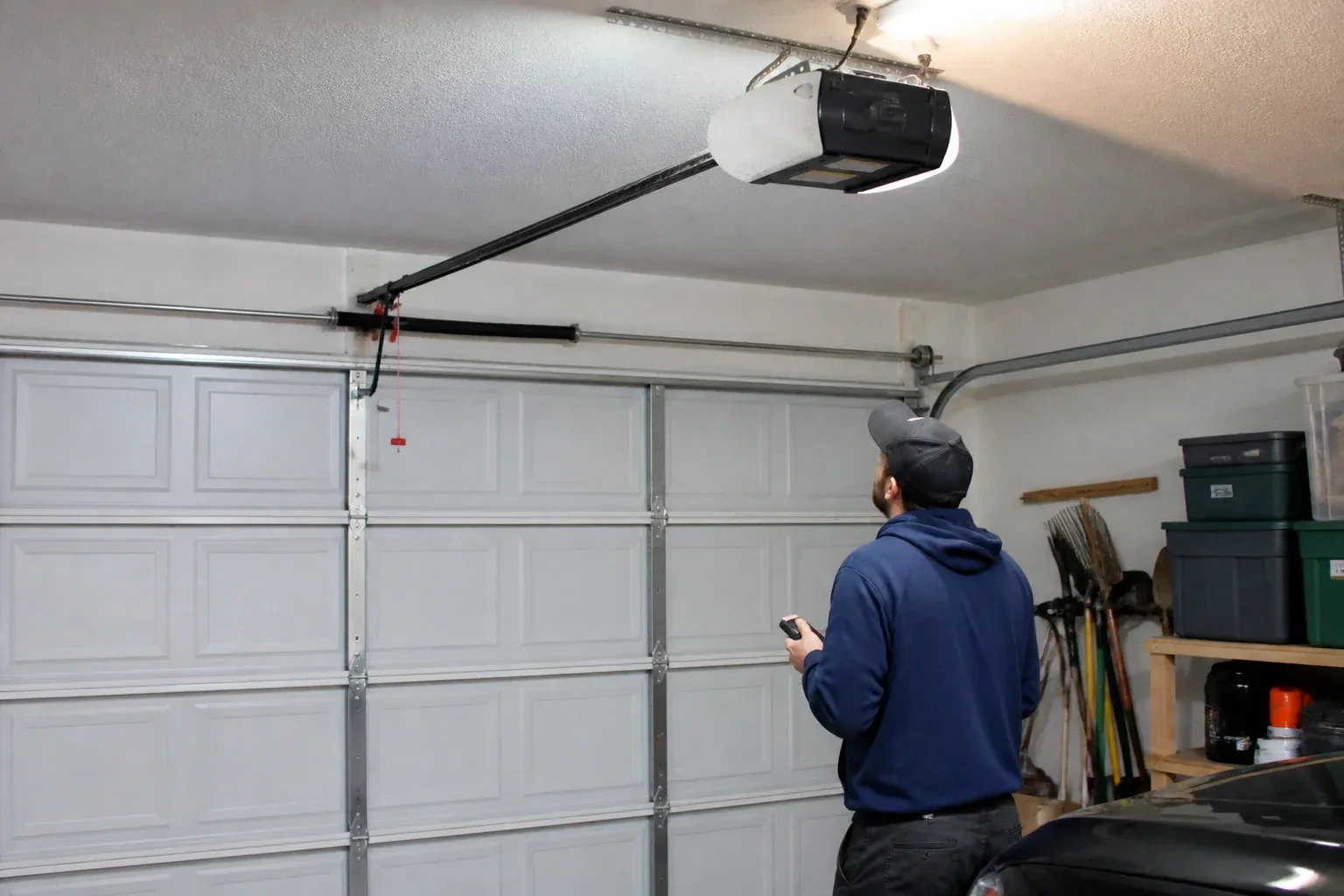
- Halfway up, every single time, the door hesitates and there is a ratcheting sound from the motor head, then it carries on. A closer look shows a stretch of the belt where the teeth are worn almost flat.
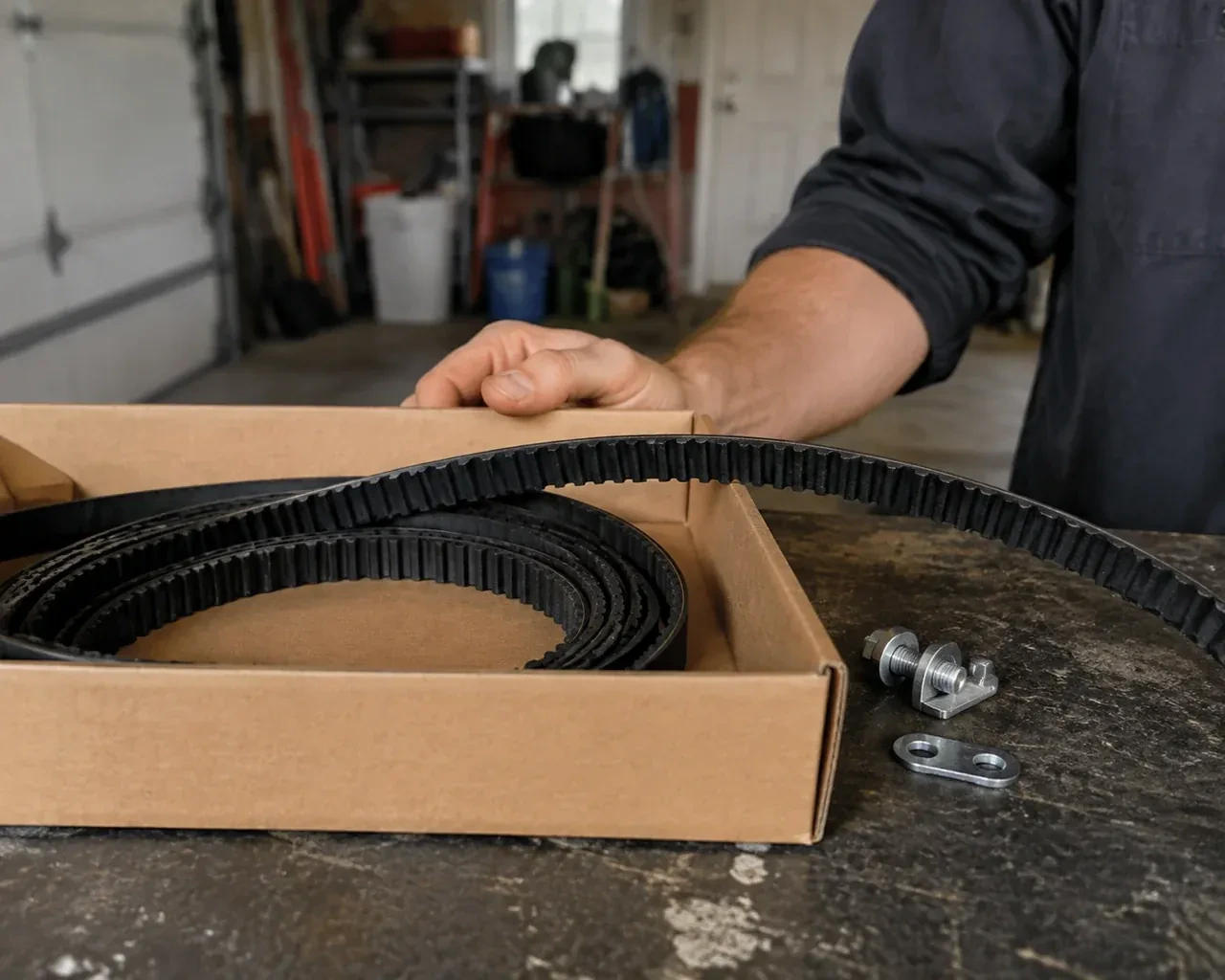
Someone tightened the belt last month to stop the sag. Now the opener sounds like a chain drive, the motor labours on the way up, and the whole rail vibrates under the ceiling.
A stalled belt drive is often a trolley problem, not a belt problem. The trolley rides the rail in two halves: an outer part linked to the door arm and an inner part gripped by the belt. Pulling the red cord parts them so the door can be lifted by hand; running the operator, or a second pull, locks them again. When the release lever sticks, the housing cracks or the halves refuse to re-engage, the motor moves the belt and nothing else. Repair means freeing or replacing the trolley, checking the belt for damage from the drag, and confirming the inner half is in step with the motor.
Sound familiar?Milton
Belt-Drive Opener Repair · Milton
Scene 1
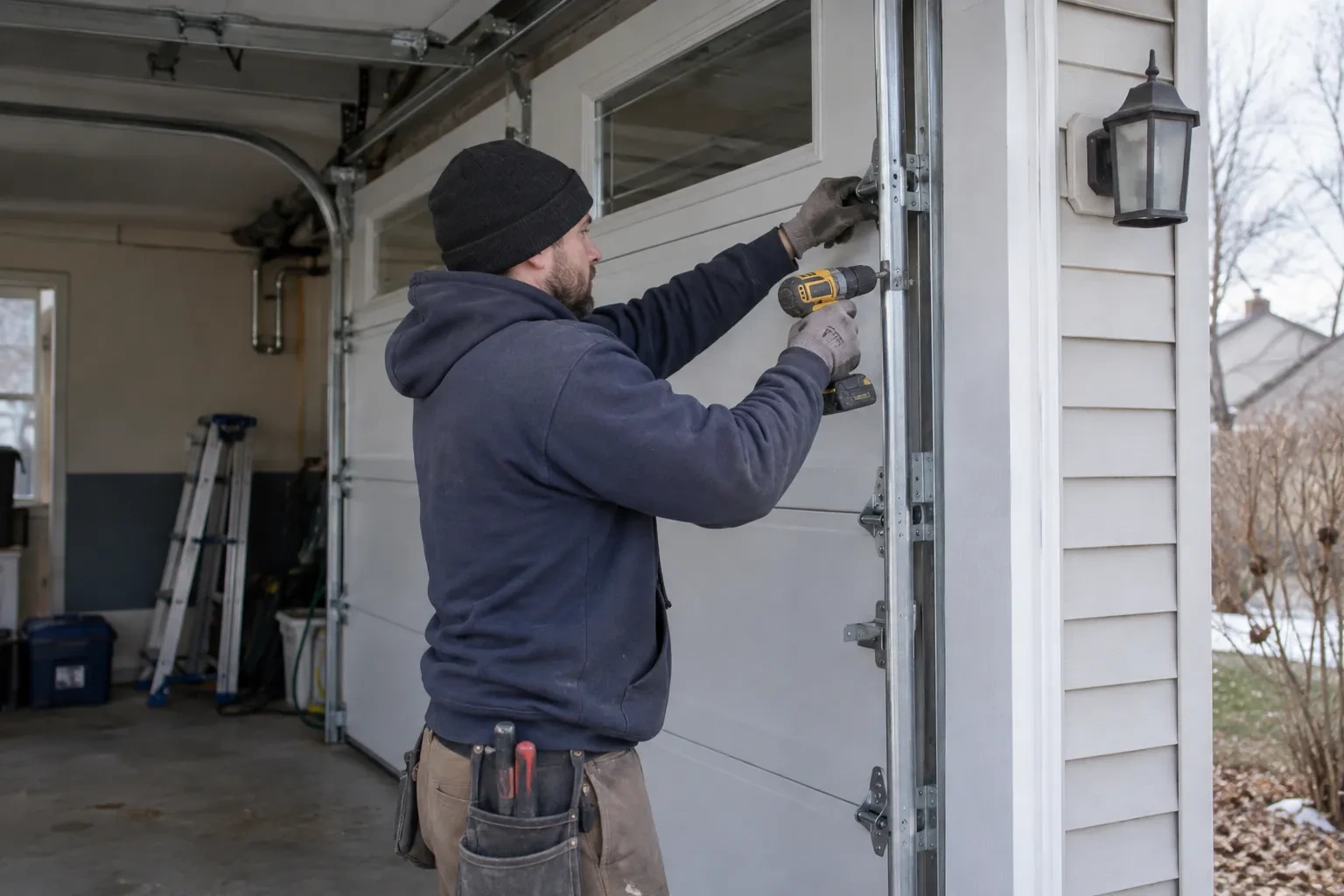
Before any part is changed, the technician runs the door from the wall control and watches what the operator thinks it is doing. Does it stop short of the floor and reverse, or drive the trolley into the stop bolt? Does the top section stop clear of the header bracket? Does the door come back up on meeting a 2x4 laid flat and when the beam near the floor is broken? The answers separate a drive fault from a settings fault, and settings will be relearned once the belt work is done anyway. The wall control height, the photo-eye height and where the red handle hangs are noted at the same time.
Scene 2
A belt drive is only as quiet as the door it moves, so the visit closes with the door hardware. Hinges, rollers and springs get a garage-door lubricant, cold-rated for a detached garage; the belt itself is wiped clean and left dry, because grease softens the rubber and packs the teeth with grit. Rail hangers are snugged, the manual slide lock is disabled so it can never be thrown against the motor, and the red release handle is confirmed to hang no more than about 1.8 m. The wall control is checked for height and the photo eyes for alignment, and the operator's cover goes back on.
Scene 3
Before leaving, the technician writes down the operator's model and serial number, which belt or parts went in, the tension setting used and the date, and hangs the note with the manual near the wall control. You are shown what was replaced and why, and the old parts are yours to keep or are taken away. Keep the note; a belt has a service life measured in years and cycles, and knowing when this one went in tells the next technician where to look. Any settings the operator lost during the work, such as remotes or a keypad code, have been re-taught and tested with you.
What shapes the quoteDorset Park Garage Door Specialists
FeesSame any hour
A look every few months is enough: with the door closed and again with it open, the belt should run level with no sag below the rail. A yearly service that checks tension against the spring length, looks at the sprocket and pulley and runs the balance and reversal tests keeps a belt drive quiet for its whole life. Check again after the first hard cold of the winter.
Park the cars outside and leave the floor beneath the rail and the door's path open so a stepladder can be set at either end. Lift bicycles and boxes off hooks near the rail. Keep the remotes and wall control within reach and know where the operator plugs in. If the door is stuck closed with a car inside, mention it when booking.
Because the belt guides the door; the springs carry it. A door that lifts with moderate effort and stays put a metre off the floor is balanced, and a belt on that door lasts. A door that drops or drifts is loading the belt, trolley and sprocket far beyond their design, so a new belt would wear the same way. Spring work comes first in that case.
HaltonOntario
Belt-Drive Opener Repair · Dorset Park, Peru
Every square is one home in a hundred.
On-site assessment
Someone tightened the belt last month to stop the sag.
(289) 670-3139, open 24/7.
On-site assessment preferred · (289) 670-3139, open 24/7