Sound familiar?Milton
- The call
- There are no sensors at the floor at all, or a previous owner has wired the pair together up beside the motor so the beam never crosses the doorway. A home inspector has just pointed it out.
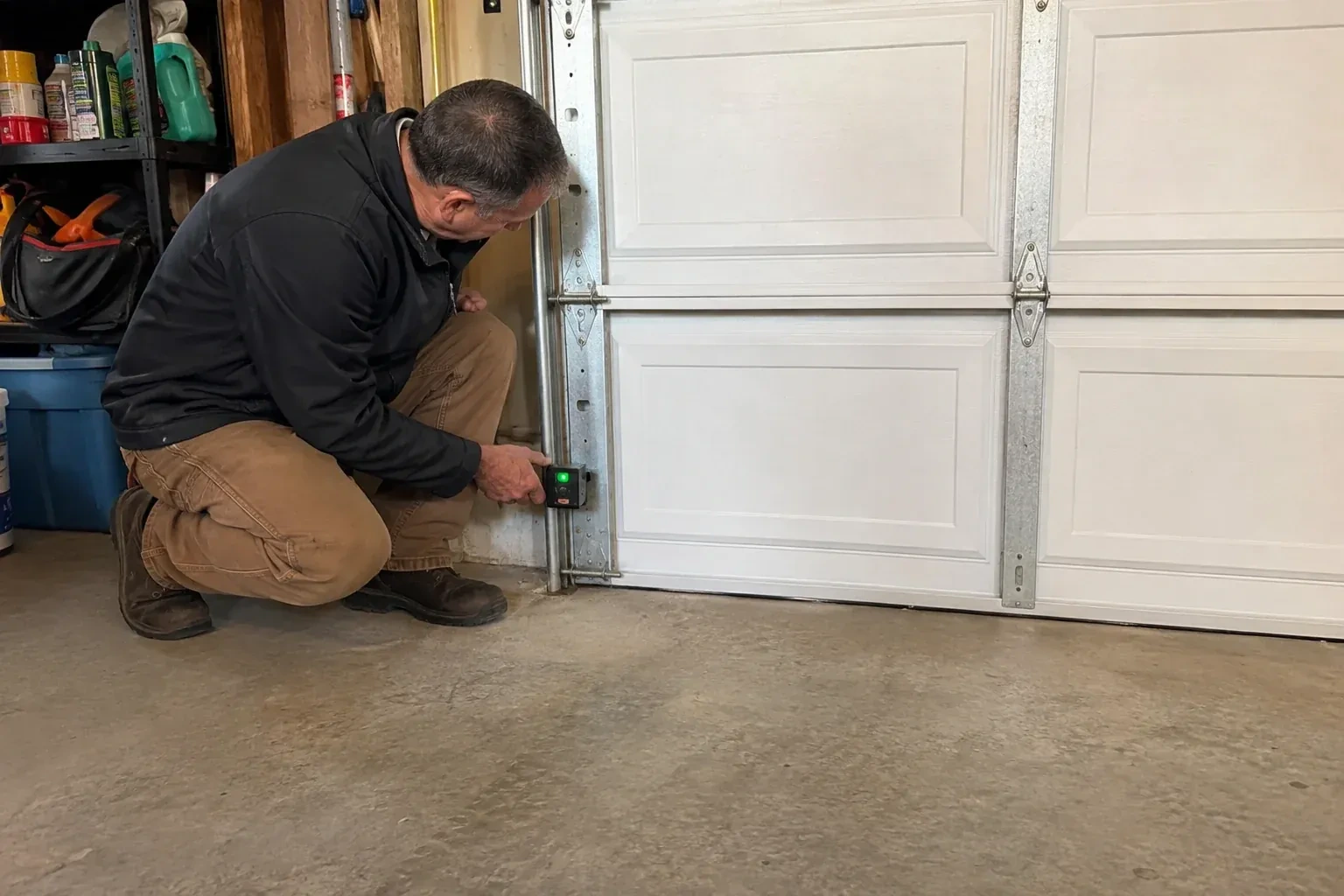
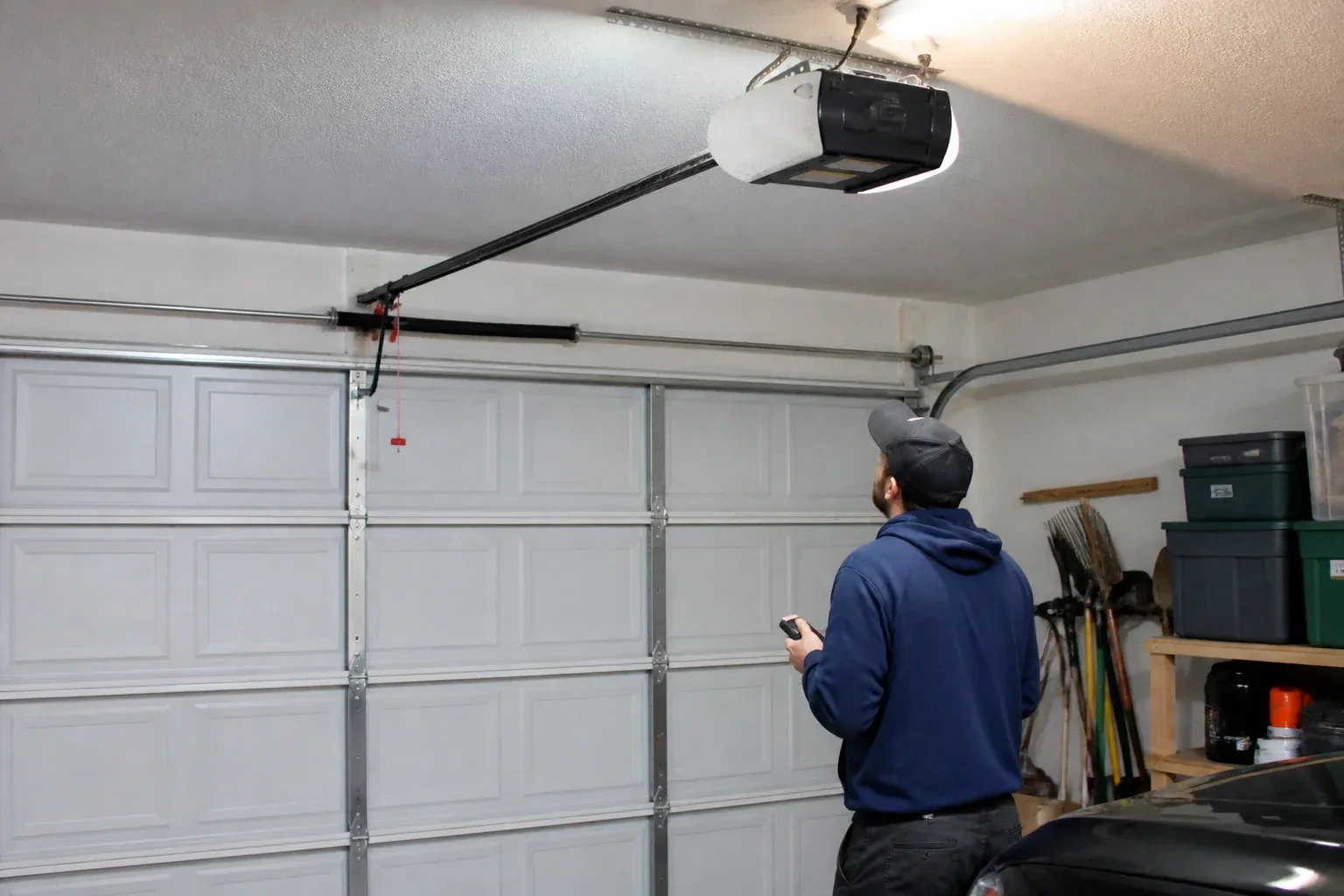
Your opener has been trying to tell you what is wrong. The head unit flashes its light a set number of times, or blinks a pattern on its up and down arrows, and each pattern maps to a cause on the maker's chart: beam blocked or misaligned, wire cut or disconnected, wires reversed or shorted. Down at the floor, many sensor pairs carry an indicator on each side, though some older pairs light only the receiver; check that model's chart, since a receiving light going out or flickering usually points to alignment. The technician reads both sets of signals first, which is why the repair usually takes one visit.
Sound familiar?Milton
Photo-Eye Sensor Alignment or Replacement · Milton
Scene 1
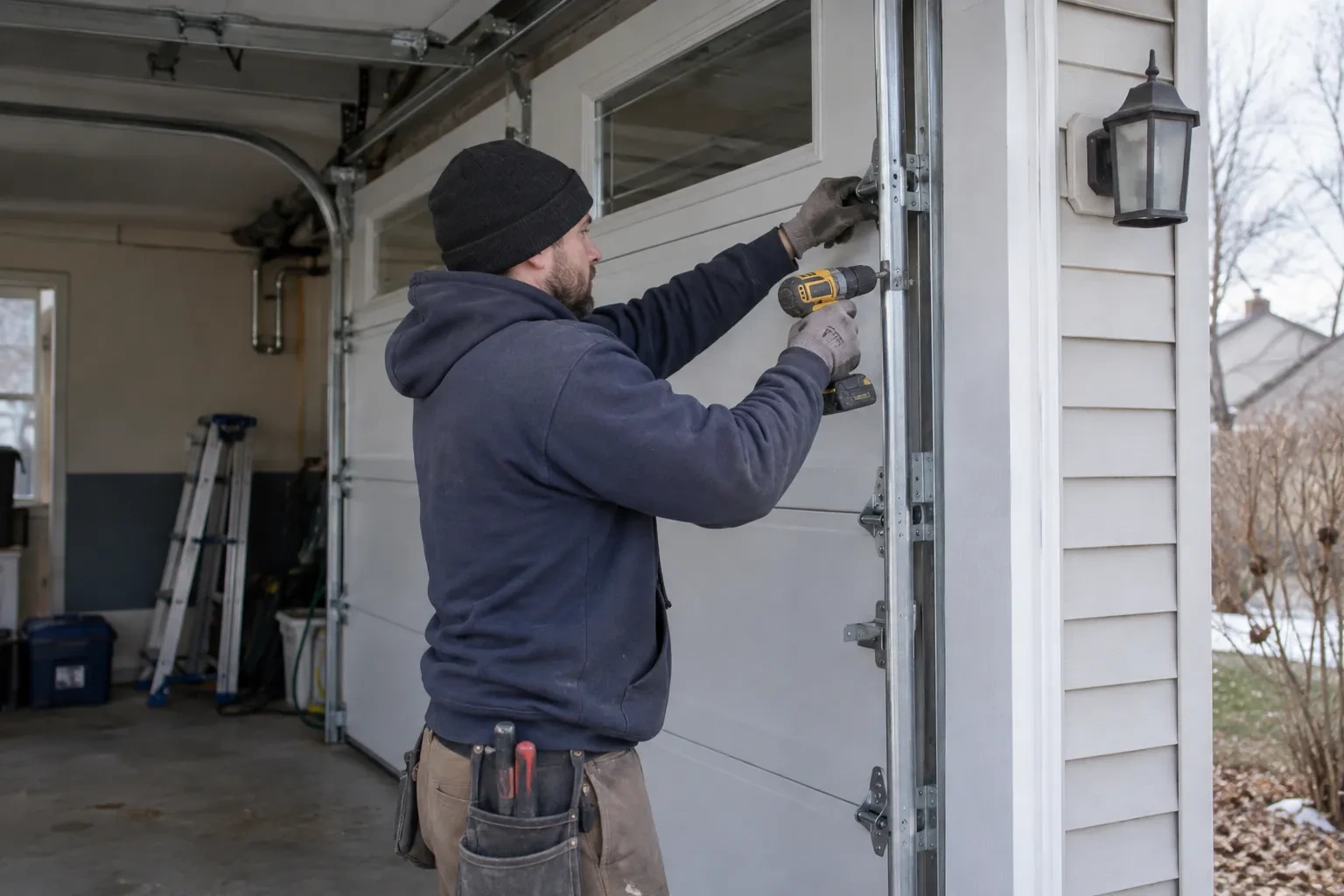
When the lights or the code point to the circuit, the low-voltage wire is followed from each sensor to the head unit. The technician looks for staples driven through the insulation, wire pinched behind a track bracket, sections chewed by mice, cuts where shelving or drywall screws went in, splices that have corroded, and terminals at the head unit that are loose or connected the wrong way round. A meter confirms continuity and polarity rather than guessing. Where the wire disappears into a finished ceiling, the readings at each end tell whether the hidden section is sound or whether a fresh run is the tidier answer.
Scene 2
No sensor job is finished on a steady light alone. The door is closed from the wall control and from a remote, and while it is on its way down an object is passed through the beam; the door must stop and return to fully open. Then a 2x4 is laid flat on the floor under the centre of the door and the door is closed onto it; it must reverse on contact. Both are repeated, the opener's diagnostic light is confirmed clear, and any app or hub reporting a sensor code is refreshed. The customer watches the tests so the normal behaviour is seen, not described.
Scene 3
You leave knowing what normal looks like at the floor. Most sensor pairs carry a small indicator on each side, often in different colours for sender and receiver, though some older pairs light only the receiver; the model's own chart tells you what steady and flickering mean. A dark or flickering light on the receiving side means the beam has been lost, usually because a bracket was bumped or something is in the path, and two dark lights mean the pair has lost power along the wire. A glance at those lights before calling anyone tells you most of what the technician would look at first, and often the fix is moving whatever is leaning on the bracket.
What shapes the quoteDorset Park Garage Door Specialists
FeesSame any hour
Very often, yes. A blinking bulb after a close command is the opener reporting that its sensor circuit is unhappy, and the count of blinks is the message: one common family uses ten flashes for the sensors, while a short two-flash pattern usually means the wall control's lock button is on. Newer units add arrow codes that separate a blocked beam from a cut or reversed wire. Counting the flashes and telling the technician the make helps identify the cause before the visit.
Track-mounted clips are the preferred, manufacturer-recommended arrangement. A wall-mounted angle bracket is the next choice where the track sits far back from the opening or the clip keeps getting bumped; mounting to the concrete floor is kept as a last resort, used only when the sensor's own instructions allow it. The same rules apply: both sensors at a matched height no higher than about 15 cm, level, facing each other, with the wire secured. Wall mounting sometimes gives a cleaner beam line on older doors with unusual track layouts.
It is a built-in stopgap, not a repair. When the sensor circuit is not satisfied, many openers allow a close from the wall control only while the button is held, on the idea that a person standing there can see the doorway. Newer units drop that behaviour altogether and simply hold the door open. Either way the door is telling you the beam has failed, and a sensor visit puts remote closing back.
HaltonOntario
Photo-Eye Sensor Alignment or Replacement · Dorset Park, Peru
Every square is one home in a hundred.
On-site assessment
Someone backed the car in a little too far, a bin or a bicycle brushed the track, and since then the door starts to close and comes back up.
(289) 670-3139, open 24/7.
On-site assessment preferred · (289) 670-3139, open 24/7